

The Threat of Microbes
Cannabis products offer significant benefits for medical patients and adult consumers, but product safety is crucial. Despite strict quality standards, harmful microbes pose ongoing risks.
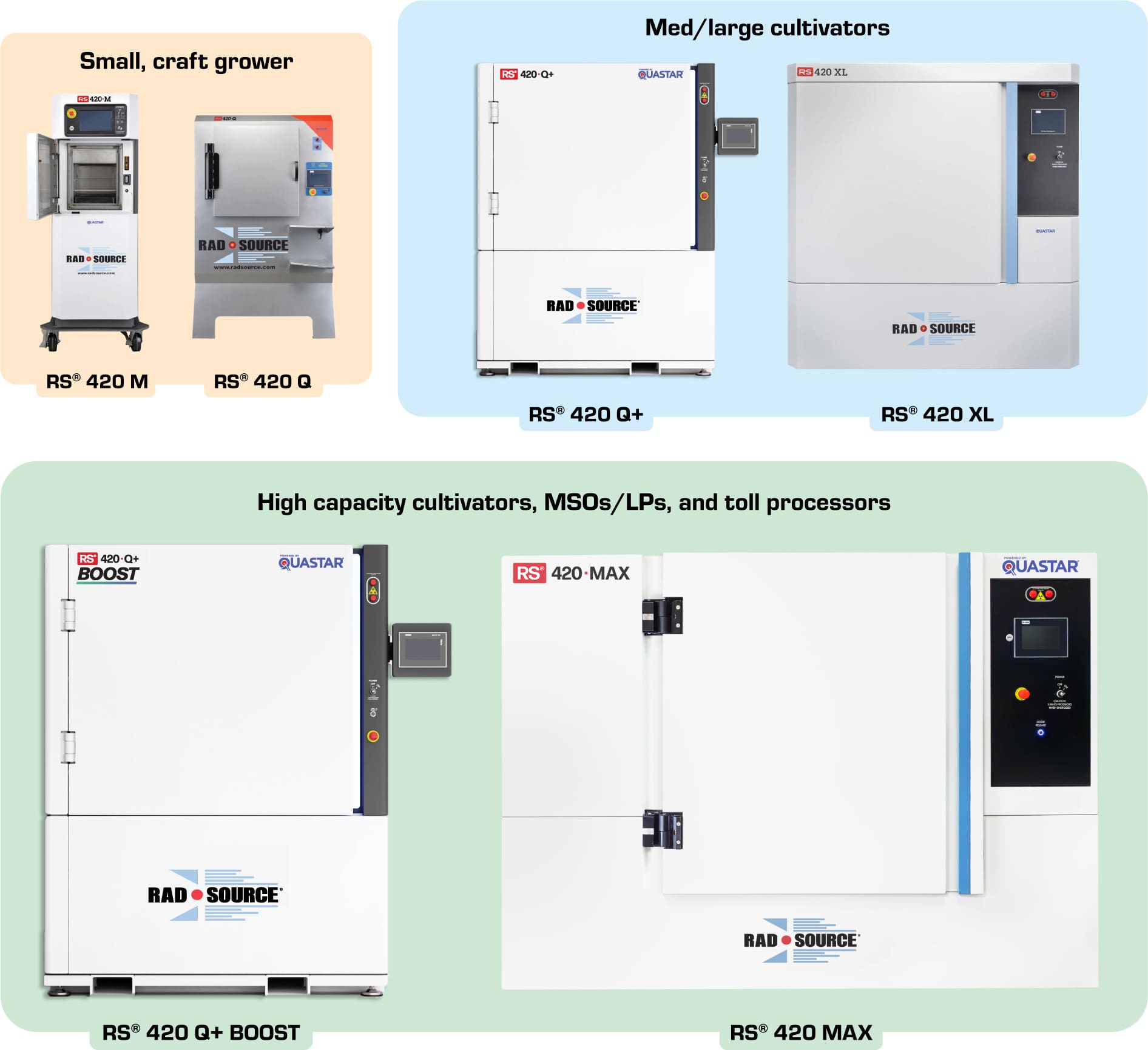
Rad Source® addresses the issue with our QUASTAR® X-ray technology. All our 420 machines:
- Neutralize microbes at the source.
- Prevent regrowth of harmful microbes.
- Ensure consistently safe and high-quality cannabis products.


Commonly Tested Microbials
Cannabis regulations vary by state across the United States, with requirements that may include:
- Salmonella
- Esherichia Coli (E. coli)
- Mold
- Yeast
- Aspergillus
- Bile-Tolerant Gram Negative (BTGN)
Salmonella
- Salmonella can infect cannabis via contaminated water, soil, or equipment.
- Can survive in various environments for weeks to months.
- Symptoms include diarrhea, abdominal cramps, nausea, fever, and fatigue (appear within 12–72 hours, last 4–7 days).
- Most recover without treatment; severe cases may require hospitalization, especially in vulnerable populations.
- Testing for Salmonella is required in 39 states to ensure non-detect levels.
Esherichia Coli (E. coli)
- E. coli can infect cannabis plants through wounds or natural openings.
- Can cause leaf spot, stem rot, and root rot.
- High humidity and poor air circulation create ideal conditions for growth.
- Most strains are harmless, but some cause serious illnesses: food poisoning, UTIs, meningitis, hemolytic-uremic syndrome, and sepsis (especially in vulnerable individuals).
- Testing for E. coli in cannabis is required in 36 states to ensure non-detect levels.
Mold
- Cannabis plants are highly vulnerable to mold during the flowering stage.
- High humidity and poor air circulation increase mold risk.
- Common molds: Botrytis cinerea (gray mold), Fusarium oxysporum, Alternaria spp.
- Mold exposure can cause allergic reactions and respiratory issues (sneezing, runny nose, red eyes, skin rashes).
- Testing for Total Yeast and Mold Count (TYMC) is required in 31 states to ensure low cfu/g levels.
Yeast
- Yeast, a type of fungus, can cause cannabis diseases like leaf spot, stem rot, and root rot.
- Infects plants through wounds; thrives in high humidity and poor air circulation.
- Yeast infections (often Candida species) can affect various body areas, especially in immunocompromised individuals or those with diabetes.
- May trigger allergic reactions.
- Testing for Total Yeast and Mold Count (TYMC) is required in 31 states to ensure very low cfu/g levels.
Aspergillus
- Aspergillus is a fungus found in soil, decaying plant matter, and the air.
- Infects cannabis when airborne spores settle on plant surfaces.
- Thrives under warm, humid conditions with poor airflow; spreads via wind, water, or contaminated equipment.
- In people with chronic lung conditions (e.g., emphysema, tuberculosis), infection can lead to aspergillomas (fungus balls in lung cavities).
- Testing for Aspergillus in cannabis is required in 22 states to ensure non-detect levels.
Bile-Tolerant Gram Negative (BTGN)
- Bile-Tolerant Gram Negative (BTGN) bacteria, including some E. coli strains, can survive in bile.
- Linked to gastrointestinal infections and foodborne illnesses.
- Not a direct cannabis plant concern, but strict hygiene is essential to prevent contamination.
- Can cause symptoms like diarrhea, cramps, fever; severe cases may lead to sepsis.
- Testing for BTGN in cannabis is required in 15 states to ensure very low cfu/g levels.
A Solution for Everyone
Peace-of-Mind Microbial Decontamination™
Cannabis products provide benefit to both patients who require medical cannabis for treatment and adult-use cannabis users. In both circumstances, cannabis harvesting and processing are regulated by strict quality regulations to ensure the final product does not risk the health of consumers. Harmful mold and bacteria are sources of cannabis contamination that need to be eliminated before it can be sold in dispensaries.
While other methods to decontaminate cannabis can lead to incomplete inactivation of mold and bacteria and regrowth of them in the final product, our patented Photonic decontamination technology inactivates these contaminants immediately, preventing them from multiplying later on and reaching a level that is a health hazard to consumers.
Proprietary Quastar® Photonic Decontamination™ Technology
Rad Source’s proprietary Quastar® Photonic Decontamination technology provides the cannabis industry with the only technology to safely inactivate Mold, Powdery Mildew, Aspergillus, BTGN, Yeast, Salmonella, E. coli, Coliform and other challenging microbes. Our room-temperature process maintains flower integrity with nominal to no effect on terpenes, potency or moisture.

The RS® 420 Series
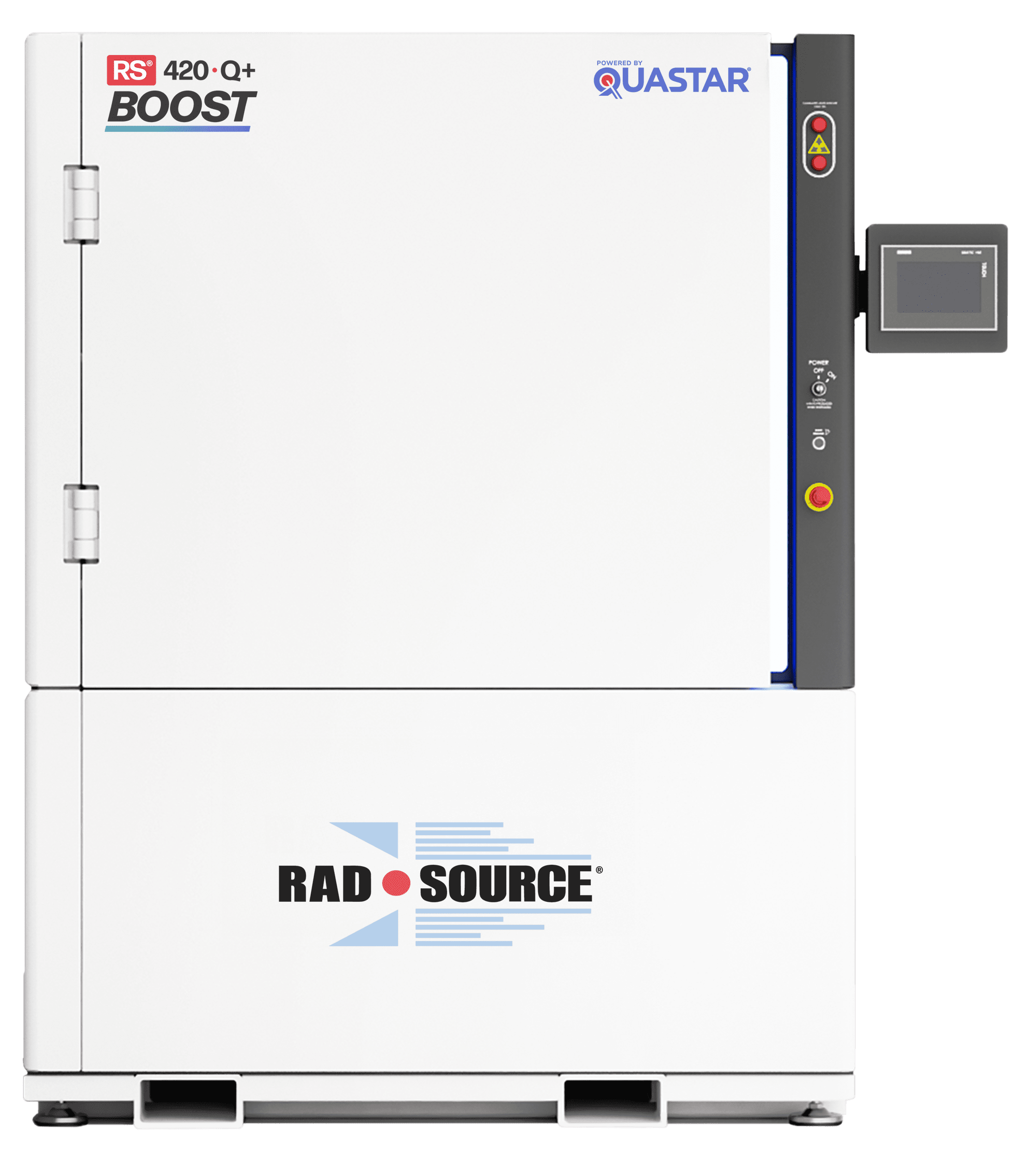
Produces efficient short light wavelengths that assure 99.9% decontamination efficiency rate and the power to penetrate a tightly packed flower to destroy challenging microbials at their DNA level preventing reproduction.
Confidence
Quastar® Phontonic Decontamination™ technologies provides a 99.9% confidence level in remediation of Mold, Powdery Mildew, Aspergillus, BTGN, Yeast, Salmonella, E. coli, Coliform, and other challenging microbes.
Flower Integrity Maintained
Photonic Decontamination ™ is a room temperature process which results in nominal to zero effect on terpenes, potency and moisture.
Premium Decontamination, Earned Trust
Quastar is the cannabis industry’s premium onside microbe inactivation technology platform and Rad Source has over 24 years of experience, covering multiple markets and over 900 installations. We offer the best overall value in cannabis decontamination.
Recent News & Studies

How To Identify Mold In Cannabis Products
Even cannabis products which are lab tested and sold in dispensaries can develop mold. Temperature, light, humidity and air circulation all play a role in the development of mold. It is harmful to ingest moldy cannabis…
Cannabis and Mold: Everything There is to Know
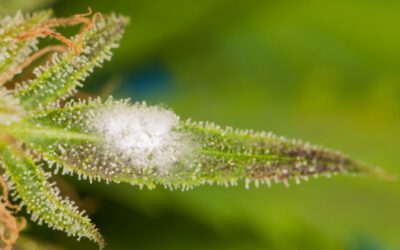
Mold is a group of microorganisms that grow in humid and damp surroundings with poor air ventilation, according to the Center for Disease Control and Prevention (CDC). It reproduces by generating small, light, fungal spores…

What to Look for in a Good Cannabis Microbial Remediator
By Chris Bond Like any consumer product, cannabis should be tested for quality, safety, and purity. Consumers need to be confident in the information provided on the packaging. Testing is the only way to ensure that a product is...